新闻热线:
 首页 >> 国际
As dusk falls over the ancient capital of Xi'an in Shaanxi province, poetry is no longer confined to stone steles and museum plaques. Along the Grand Tang Mall, a Tang Dynasty (618-907)-themed pedestrian avenue, verse now lights the way. Lanterns inscribed with the calligraphy of Tang poets Li Bai and Du Fu hang from trees and arch above the crowds, turning an evening stroll into a journey through a living anthology.
This is the latest expression of Xi'an's cultural strategy. The city, once known as Chang'an and widely regarded as the epicenter of the country's golden era of poetry, has launched an ambitious plan to rebrand itself as the "City of Tang Poetry". Beginning last year, a three-year municipal initiative aims to fuse the intangible heritage of the Tang Dynasty with modern tourism, urban design, and daily life. The authorities want to do more than just illuminate its literary legacy; they want to build an entire cityscape where poetry is not only seen and read but felt, flown through, and physically explored.
At the heart of the Grand Tang Mall's nighttime spectacle is one of the city's newest attractions: the Qujiang Flying Theater, which opened in September. Built around the works of Li Bai, Du Fu, andWang Wei, the theater combines a 180-degree dome screen with holographic technology to immerse visitors in a poetic flight through history.
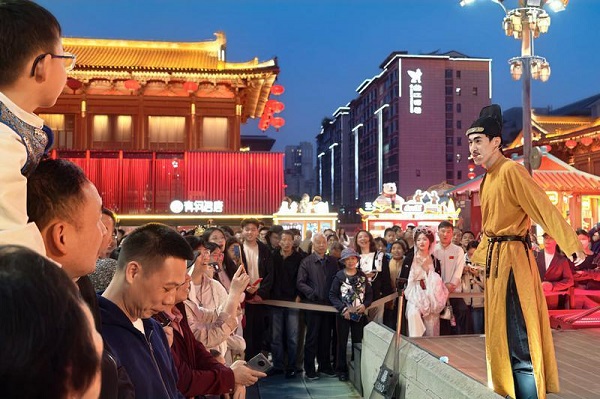
People watch a performance at Grand Tang Mall. [Photo/Xi'an news network]
Inside the 12-seat cabin, audiences do more than just listen to the poems — they soar above lantern-lit palaces, glide past the Giant Wild Goose Pagoda, and drift through mist-covered mountains that once inspired the poets, while verses echo through the experience in the voices of the masters themselves.
A short drive away, Tang Paradise, a sprawling cultural theme park, offers a quieter but equally immersive encounter with the poetic past. Built around the concept of "poetic soul, poetic realm, poetic life", the park has turned into a flowing scroll of Tang verse.
Another landmark is the City Wall Relics of Tang Dynasty, a linear park built atop the archaeological remains of the outer city wall of Chang'an. It has been transformed into a 4.2-kilometer-long poetry corridor. Along the route, visitors encounter static installations — murals, sculpted steles, and engraved pavilions — that trace the arc of the Tang poetic canon. The park also encourages participation: in a Tang poetry maze, families navigate hedgerows decorated with incomplete couplets, choosing the correct line to find the right path forward.
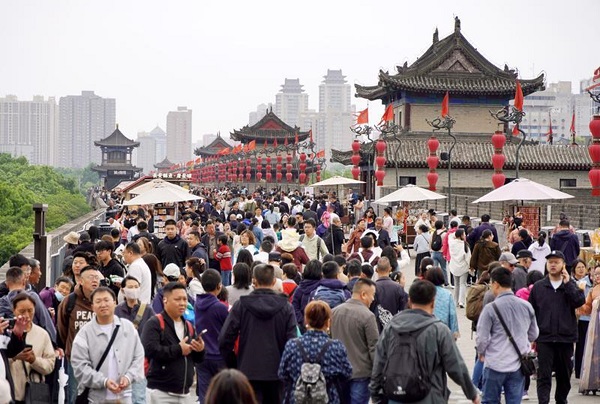
The Xi'an City Wall attracts many visitors. [Photo/Xi'an news network]
The initiative extends beyond the three parks, with plans to develop Tang poetry scenic routes connecting historic sites and natural landscapes on the outskirts of the city. But for residents and tourists alike, the most immediate change is the way poetry has seeped into the urban texture. Streetlamps display poetic couplets, interactive performers duel with passersby in spontaneous verse, and the city's very walls murmur with the voices of Li Bai, Du Fu, and generations of poets who once called this place home.
责任编辑:吴佳蕊
免责声明 以上文章仅代表作者个人观点,本网只是转载,如涉及作品内容、版权、稿酬问题,请及时联系我们。电话:029-63903870